by Juliette Binoche + Akram Khan
"in our lives, we have to descend into the bottom of ourselves in order to resurrect, otherwise how do we gain real love and real awareness? it comes from real exploration of our emotions and body."
"if you get stuck with emotions, you are a prisoner, but if you use it as a tool to go to another level of awareness then it is magnificent."
"when two people love each other, the other one helps you push your limits, push through yourself to go to your edge emotionally."
"love is a process, a learning, a risk, a will, but it is a let it happen too."
Monday, July 26, 2010

Thursday, May 6, 2010
a little self promotion!

[Interview by Factio Magazine and FigPhoto @ Creative Lounge Chicago, April 2010]
*Photo by Brian Carey, video by Tim Musho, figphoto.net
*Photo by Brian Carey, video by Tim Musho, figphoto.net
Artist Avisheh Mohsenin
Born in France, Mohsenin moved to Iran while growing up and later moved to the U.S. for graduate school. She is a co-founder of Pasfarda Arts & Cultural Exchange, an organization that promotes global exchange of arts and culture. Mohsenin creates imagery to stimulate imagination and to lead viewers into questioning their own notions of time and space in their personal environment. Throughout her work duality is used as a major element. - Brittany Berryman
*Photo by Brian Carey, video by Tim Musho, figphoto.net
Factio Magazine 2010 - Avisheh Mohsenin Interview from Fig Media on Vimeo.
Tuesday, April 13, 2010
"bahok" -- what are you carrying?
who are we? what we take with us when we move through the world? through life?
Akram Khan, acclaimed contemporary choreographer, named one of his productions "bahok", a Bengali word that means "carrier". I stumbled upon the trailer and beautiful dances by chance and it just hit the right spot. He asks in his performance "what are you carrying?" My interpretation is that each human carries a set of characteristics and qualities and choices that they make on how to live their lives and how to view their journey and how to relate to others.
Papa was the 'bahok' of: inspiration and pushing people to the higher of their potentials. He did this through being extra-ordinary; sharing and giving instead of taking; forgiving and letting go; being ambitious not only for the goal but also for the process; seeing the good in everything and everyone; living life fully in every second; pushing oneself and seeing no limits and at the same time not losing sight of the present, the core, the simple and the real; not taking life or oneself too seriousely, yet never compromising for one's values and ideas; a fighter but only through peace, negotiation and logic; having a lot of respect for the human soul; and always being able to laugh or smile.
People wrote us today: "he is my role model, missing him so much."; "he will always remain as a precious building blocks in who I am today and this will stay with me as long as I am around."; "I owe so much of who I am and how I am today to him. Wish he'd stick around some more... he is present in my heart and soul especially every time I stand on a mountain top."; "best man, best friend, he is really missed."; "I'm so proud to have known him."; "You can't imagine how much Doc-Mohs meant and means to me. He was definitely one of the most influential people in my life."; "Amou Mohsen would create this ambition in you while not leting you take yourself too seriously. He had a good eye and he observed well and treated everyone accordingly."; and
"I miss him a lot more than what anyone can imagine."

** Bahok by Akram Khan Company, 2010 @ MCA Chicago: http://www.youtube.com/watch?v=v6yfrOuaFnA
Today is April 13, the day my father left us in the physical world. Eulogies and praises still come four years later. I asked myself earlier today what these influences were that he left so prominently on people and why was he capable of putting such lasting marks on people's lives and personalities? Does everybody have that capacity, that capability?
Akram Khan, acclaimed contemporary choreographer, named one of his productions "bahok", a Bengali word that means "carrier". I stumbled upon the trailer and beautiful dances by chance and it just hit the right spot. He asks in his performance "what are you carrying?" My interpretation is that each human carries a set of characteristics and qualities and choices that they make on how to live their lives and how to view their journey and how to relate to others.
Papa was the 'bahok' of: inspiration and pushing people to the higher of their potentials. He did this through being extra-ordinary; sharing and giving instead of taking; forgiving and letting go; being ambitious not only for the goal but also for the process; seeing the good in everything and everyone; living life fully in every second; pushing oneself and seeing no limits and at the same time not losing sight of the present, the core, the simple and the real; not taking life or oneself too seriousely, yet never compromising for one's values and ideas; a fighter but only through peace, negotiation and logic; having a lot of respect for the human soul; and always being able to laugh or smile.
People wrote us today: "he is my role model, missing him so much."; "he will always remain as a precious building blocks in who I am today and this will stay with me as long as I am around."; "I owe so much of who I am and how I am today to him. Wish he'd stick around some more... he is present in my heart and soul especially every time I stand on a mountain top."; "best man, best friend, he is really missed."; "I'm so proud to have known him."; "You can't imagine how much Doc-Mohs meant and means to me. He was definitely one of the most influential people in my life."; "Amou Mohsen would create this ambition in you while not leting you take yourself too seriously. He had a good eye and he observed well and treated everyone accordingly."; and
"I miss him a lot more than what anyone can imagine."

akram khan dance company, bahok, 2009
Monday, March 8, 2010
internatinal women's day 03.08.10
International Women's Day, 2010 | Chicago Art Department | 1837 S. Halsted, Chicago, IL 60608 | 6-10 PM - Multi-media group show | Live performance | http://www.chicagartdepartment.org/


her story - work in progress - photo collage & mixed media - avisheh mohsenin 2010
It is the middle of a night in 1983;
the sirens go on, it is a ‘red’ one announcing that bombers are approaching
Tehran. We need to wake up and take
refuge. Mom comes and nicely tries to wake
us up, we resist, we like the adrenaline rush, we don’t comprehend what dying
under rubbles means, we like her close by; we are 7 and 9. She pulls me and my sister out of our beds
and we join the neighbors under the staircases, in the refuge. There is fear, there is uncertainty and
anticipation, crying, prayers, mumbling, and a lot of closeness waiting for
fate to make its passage. Mom consoles
the scared ones until the ‘white’ sirens allow us to go back.
It is the first Saturday of the month
in 1984, time to visit Dad in prison. Mom
drives us and grandma to the suburbs where the jail is, in the middle of an
arid land, behind gray tall walls, with a lot of families outside,
waiting. There is anticipation of
whether a visit would be granted or not; how the prisoner looks like and feels like
this time around; do they have a sentence yet? We make
friends, we missed school. It is fun. We
play. Mom waits in lines for hours along
with other wives and mothers of political prisoners. We finally get in to the other side of the
walls. Waiting again behind an ugly metal for our names to be called. ‘Mohsenin Family. Next.’ We stand up, before going in, Mom stops us and
says: ‘pull your shirt’s red sleeves and roll it over the gray sleeves.” We
are in our gray uniforms matching the Islamic scarves. ‘Let him see some color,’
Mom says. We go in, Dad behind the glass
windows, we both pick up the phone receivers to talk. ‘Nice shirts girls, you look good in red!’ says
Dad.
It is March 19th, Mom is
still not home. We worry about Nowruz (Persian
New Year) and not having something new to wear. How sacrilege, how unprecedented. How can she work so late when we don’t have
anything new for the new year? Where is she? We go to bed looking at the new
shiny black shoes that don’t have a dress to go with. We wake up in the morning. Worried. Roll out of bed and there they are, two beautifully
sown red
dresses, customized, lovely, and brand new. Mom stayed up all night to finish them after
she got back from work, late.
Middle school. All girls. Dark blue
uniforms with matching scarves. Ugly but
agile. Nazi Principals and Superintendents. Random bag searches. Mandatory fasting during Ramadan. Pop quiz on religion. Also laughter, running around, youth,
playfulness, smuggled Michael Jackson and Madonna tapes, photos of American pop
stars, love notes, dirty jokes, giggles, innocence at the intersection of
adolescence. One morning, I get singled
out of the line and called into the Principal’s office. Are you a boy? No. Is here a campsite? No. Are we hiking? No. So why are you carrying a backpack? a red one,
no less!? Next day. Mom comes in, with a hat of logic and an intent
of educating via communicating. She
talks to the Principal for a while behind closed doors explaining that an 11
year old girl can use a backpack and that it means absolutely nothing. Principal responding that it is Westernized,
it is boyish, it is not feminine and that she searches her daughter’s schoolbag
every night after the 13 year old goes to bed, suggesting my mother does the
same! Whatever else was said during this ‘1984’ discussion, the result was that
my sister and I got to keep our red backpacks that year, and half of the school
started carrying backpacks the following year. Mom wins. We win. Red
backpacks win.
It
is sometimes between 1982-1984. Dad is in Khomeini’s political prison. After a
year of monthly visits, they grant us a ‘family visit’ to spend the night in
prison with him. Mom starts packing for
this one-in-a-lifetime opportunity. Without saying it, everyone fears that this
might be the last time we all touch him, it might indeed be why such a visit is
granted. There is excitement
anyway. A one-on-one visit, without the
glass separation and talking via phones on both sides, without a limit that
cuts your conversation abruptly in the middle, without dragging your hands on
the glass to feel like you are touching him, without the visitors moving away
from the
glasses and out of the room, with their heads 180 degrees turned back as the
inmates line up on the other side going the opposite way, with their heads at
180 degrees. Mom starts packing. I am
happy for her. I have probably heard about love making, or a version of it
perhaps. As she packs our bags and hers,
she drops a pack of feminine hygiene pads into hers and says out loud: ‘so that
they know it is not all about sex.’ As if she feels this visit is an act of
pitying or teasing. She doesn’t have her
period. She doesn’t get them anymore.
She stopped at age 37 because of the shock of her husband not coming home one
day and her having to go claim him at the local jail. Or maybe she stopped getting her period -20
years before it was due- the day that her friend she had made in lines at the
prison called with a shaky voice. ‘They just called. They want me there. Will
you please go with me?’ They went, and all they got, was a pack of the woman’s
husband’s clothes, thrown at her without any explanations. He was
executed. My mom had to collect her and
her pile of clothes from the ground and take her back to her house. Maybe they both stopped having their periods
that day. She at 28, my mother at 38.
These stories and alike
have fascinated me with the life of my mother as the woman, the mother, the
worker, the wife, the political prisoner’s family, the daughter, the poetess, the
teacher, the lover, the feminist, the friend, the sister, and the artist. I saw glimpses of each one of these characteristics
as we grew up but I still do not grasp fully everything that she was. I have reached an age that I remember her
vividly when she was my age and I keep asking myself, how did she do it all? What
went on in her heart and in her mind? What would she do differently? What were her
frustrations? her fantasies? And most
importantly how did she manage do all she did so delicately, so smoothly in
such a dark and hard era in Iran.
I have started an ongoing
project discovering my mother and her journey as a woman. She taught me and my sister to be independent,
proud women, strong but loving, fierce but soft, ambitious but balanced, and
never to be a victim. I would like to
discover how, and as I do so I would like to create a series that pays homage
to her and all that she is about.


installation view: her story - work in progress - photo collage & mixed media - avisheh mohsenin 2010
Wednesday, December 16, 2009
Can you split the act from the actor?

This is about judging an act beyond the intertwining relationship of the person and their act.
Can you objectively value what someone does or say purely based on that and without asking about the doer? I don't mean the intentions of the person, but who they are? their socio-economic and demographic attributes? their personal, emotional and life stories?
I had a discussion over a letter written from one acclaimed international figure to another one, that I found to be unintelligent and not well-delivered. I formed an opinion based on the content and tone of the letter, and ignored who was on each side of the letter. People opposing my opinion, focused on the status, experience, fame, and characteristics of each individual, such as their sensitivity levels, their life suffering, etc., and valued and viewed the letter very differently than how I did.
This is very interesting as it can be manifested in many forms. For example, the artist and their work of art have a very intimate relationship but conventional wisdom suggests that works of art should be evaluated based on the work and not who the artist is. On the other hand, in the legal system, the actions of individuals are evaluated based on the harm they purport on others and the society, but in assessing a punishment, the perpetrator is evaluated as well. Anything that can justify why the bad act took place eases the judgment and the sentence.
We can see similar situation in politics, in relationships (both personal and professional), and in business. Is this a cultural issue where some culutres tend to mix the two more than others? If so is one way superior to the other? and should we try to become 'person-blind' when it comes to our judging an act, a thought, a work of art, a policy, a word, and an idea?
Wednesday, December 2, 2009
"Intelligence is really a kind of taste ...

Taste and intelligence! two key characteristics that often play as bonds for relationships.
We tend to attract and be attracted to like-minded people, to those with the same curisosity, taste, and 'intelligence' as us, and is that done consciousely or not? maybe a mix of both.
What is 'intelligence' anyway? Susan Sontag thinks it is just "taste for ideas". I usually see it as having curiosity and judgment, not taking any answer as-is. To be able to see the abstract and to inquire and ask about facts, to see them from other angles and to always ask, why? There are numerous studies and school of thoughts on the definition of it, but is 'intelligence' something we can improve on? benchmark and thrive for a higher level of it?
And as we move up the 'intelligence' ladder, do we have to adjust our relationships with others accordingly?
* Quote by Susan Sontag.
Monday, September 21, 2009
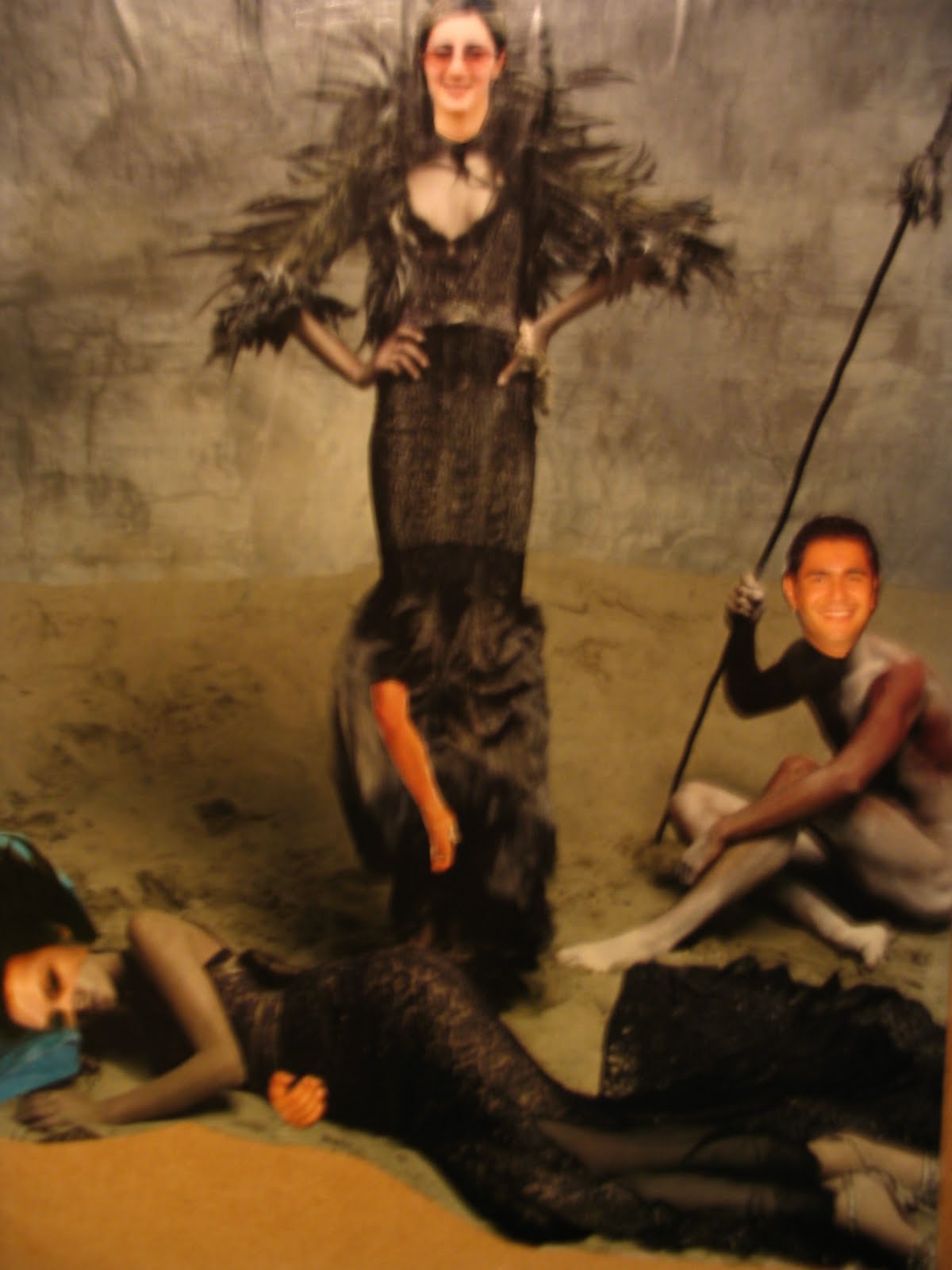
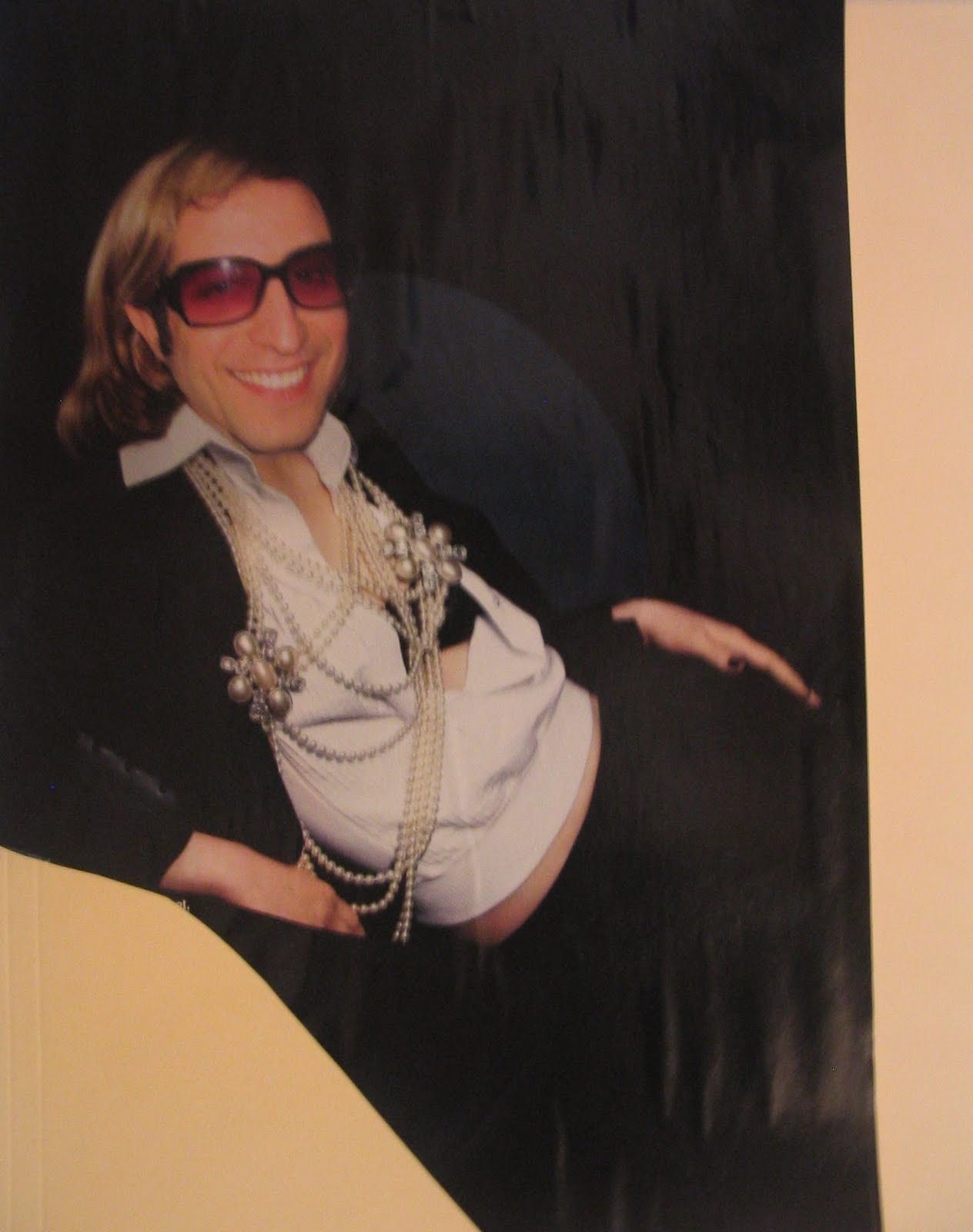
from the collage archives
Just accessed old archives of my photos and works after years!
These are my first collages. I was moving to France that summer and had a going-away week-end long party with a lot of friends flown from all over to see me before I leave.
These were my goodbye gifts to them, a fragment of me so that they don't forget me.
It is still fun! :)




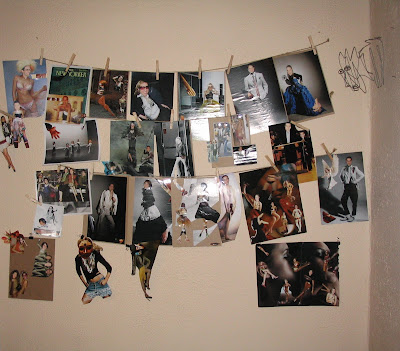
These are my first collages. I was moving to France that summer and had a going-away week-end long party with a lot of friends flown from all over to see me before I leave.
These were my goodbye gifts to them, a fragment of me so that they don't forget me.
It is still fun! :)




Subscribe to:
Posts (Atom)